

Kama Sutra - Awareness & Misconceptions

Why the Kāma Sūtra Is a Book About Life, Not Just Love
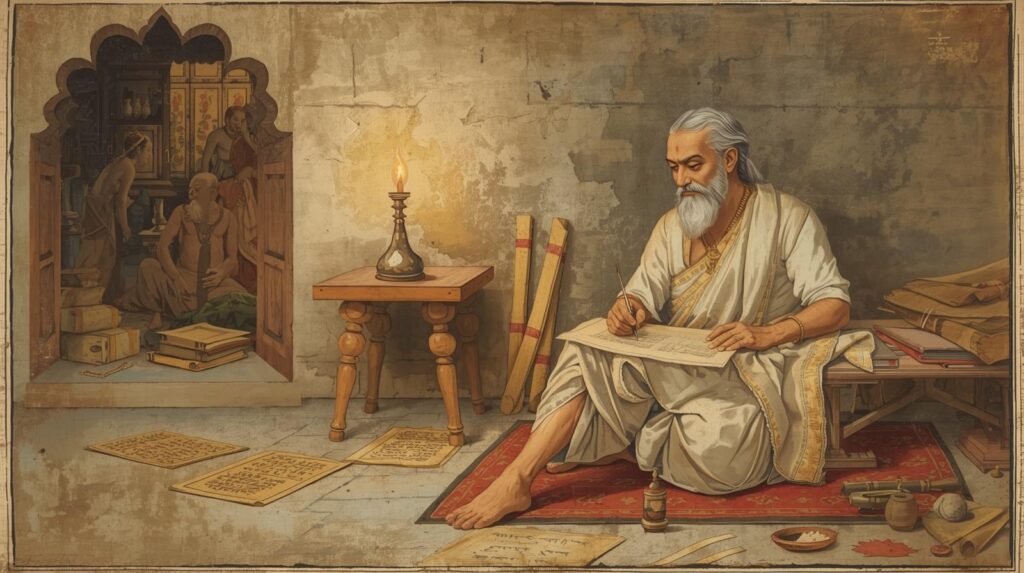
The Kāma Sūtra is often misunderstood as a text limited to romantic or physical relationships. Yet such a view ignores its deeper purpose. Composed by Vātsyāyana, the work belongs to the larger intellectual tradition of Kāmaśāstra — the science of desire — and is rooted in the broader framework of human life.
To understand the text correctly, we must situate it within the classical Indian vision of the Purusharthas — the four aims of life.
The Purusharthas: A Balanced Vision of Life
Classical Indian philosophy describes four fundamental human pursuits:
-
Dharma – ethical conduct
-
Artha – material stability
-
Kāma – pleasure and emotional fulfillment
-
Moksha – spiritual liberation
The Kāma Sūtra does not elevate desire above all else. Instead, it integrates it into this balanced system.
One of its foundational invocations reflects this alignment:
धर्मार्थकामेभ्यो नमः।
Dharma-artha-kāmebhyo namaḥ.
Meaning: Reverence to Dharma, Artha, and Kāma.
The placement is significant. Pleasure is acknowledged — but never isolated from ethics and livelihood.
Desire Within Discipline
Another guiding principle appears early in the work:
धर्मार्थौ यस्य न स्यातां न स कामस्य सेवकः।
Dharma-arthau yasya na syātāṃ na sa kāmasya sevakaḥ.
Meaning: One who does not uphold Dharma and Artha is not fit to pursue Kāma.
This sūtra clarifies a crucial idea:
Desire must rest upon responsibility.
Without ethical grounding and social stability, the pursuit of pleasure becomes imbalance.
More Than Romance: A Social Text
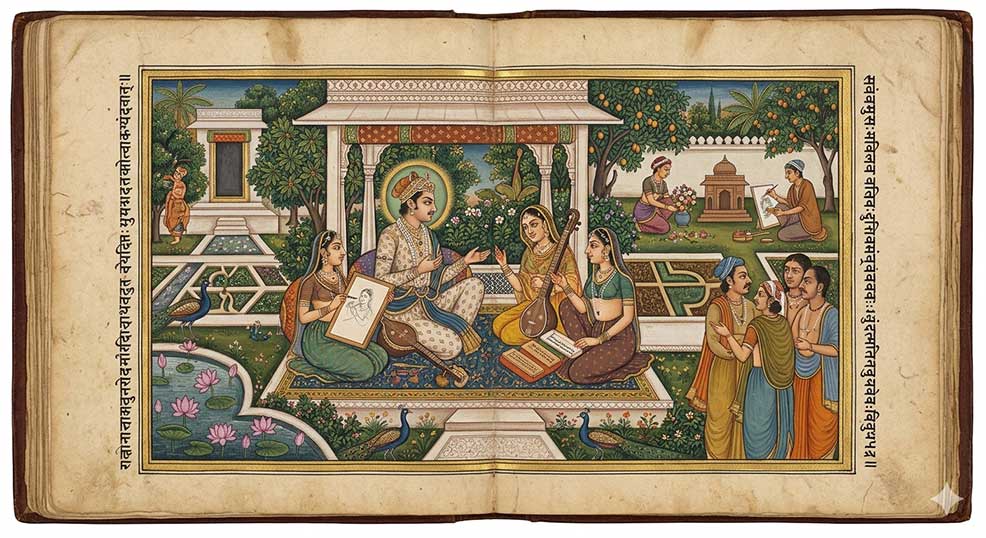
Large sections of the Kāma Sūtra examine:
-
Education and refinement
-
Social etiquette
-
Personal conduct
-
Marriage responsibilities
-
Communication between partners
-
Emotional understanding
It studies the structure of urban life, not merely private affection.
It discusses how individuals cultivate themselves before entering relationships — suggesting that personal maturity precedes partnership.
Psychological Insight
The text reflects acute psychological observation:
-
Compatibility between individuals
-
Managing jealousy
-
Timing and discretion in expression
-
Mutual respect and reciprocity
These are concerns central to modern relationship psychology.
The emphasis is not on indulgence, but on awareness.
Women and Agency
The text also addresses women’s education, independence, and social participation within its historical context. It presents them as intelligent agents in the dynamics of courtship and marriage.
This reinforces the broader scope of the work as a study of social life.
Why It Is About Life
When seen in context, the Kāma Sūtra becomes:
-
A sociological document
-
A psychological study
-
A guide to relational ethics
-
A reflection on balanced living
It treats pleasure not as excess, but as one dimension of a well-ordered life.
Modern Relevance
In contemporary society, relationships often suffer from:
-
Emotional miscommunication
-
Impulsiveness
-
Lack of balance between work and intimacy
-
Confusion between attraction and commitment
The classical insight remains relevant:
Pleasure must coexist with responsibility.
The Kāma Sūtra reminds us that desire, when guided by discipline and ethical awareness, becomes a source of harmony rather than disorder.
Conclusion
The Kāma Sūtra is not merely about love. It is about how human beings live — how they relate, communicate, cultivate refinement, and pursue joy responsibly.
When understood within Dharma and Artha, Kāma becomes not indulgence, but balance.
Seen this way, the text is not sensational — it is civilizational.
