
Kama Sutra - Awareness & Misconceptions
What the Kāma Sūtra Really Is (And What It Is Not)
For many people, the very mention of the Kāma Sūtra immediately evokes a narrow image — a book concerned only with physical intimacy. This modern perception, shaped largely by popular media and commercial reinterpretations, obscures the text’s true depth.
In reality, the Kāma Sūtra is a classical Indian treatise on human relationships, emotional intelligence, social conduct, and the refined pursuit of pleasure within ethical boundaries.
To understand what it truly is, we must first understand what it is not.
What the Kāma Sūtra Is Not
-
It is not merely a manual of physical techniques.
-
It is not a religious scripture prescribing rituals.
-
It is not an isolated work disconnected from Indian philosophy.
-
It is not an endorsement of indulgence without responsibility.
Modern misunderstandings arise because only one small portion of the text deals with physical union, while the majority discusses courtship, marriage, household dynamics, ethics, and emotional behaviour.
What the Kāma Sūtra Actually Is
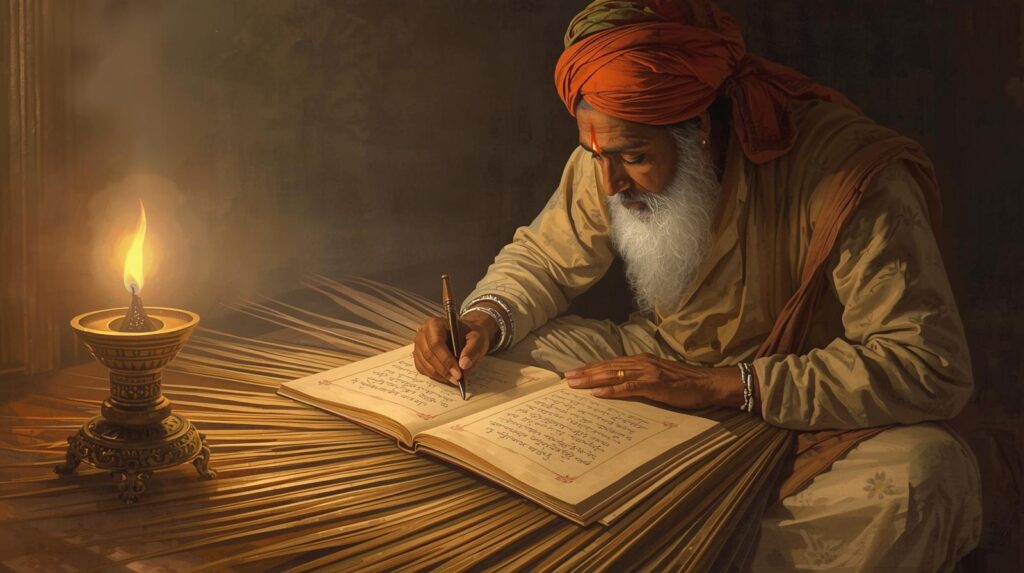
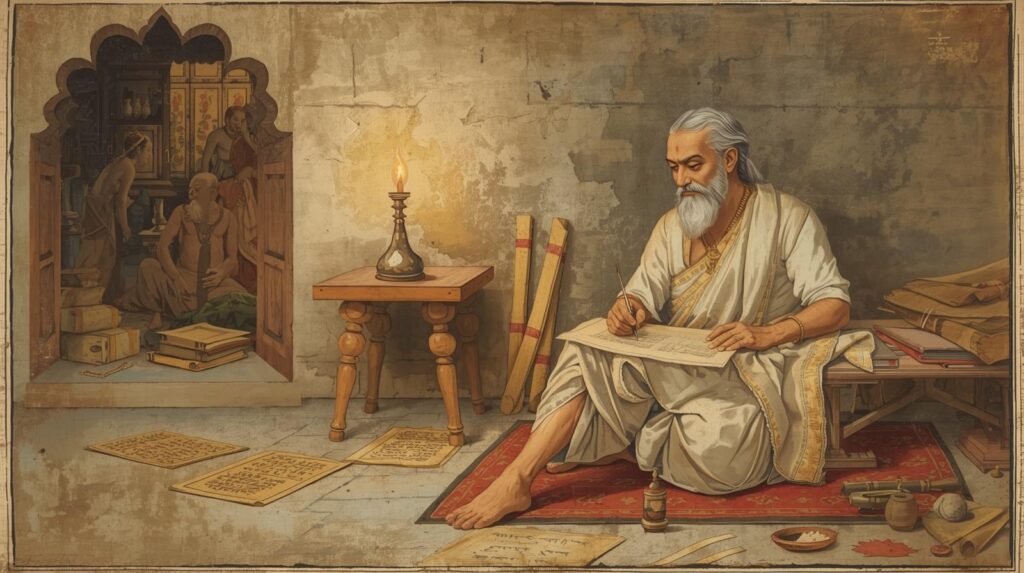
The Kāma Sūtra, composed by Vātsyāyana (likely between the 2nd and 4th century CE), belongs to the broader tradition of Kāmaśāstra — the science of desire.
It is part of the larger philosophical framework of the four Purusharthas:
-
Dharma (ethical duty)
-
Artha (material prosperity)
-
Kāma (pleasure and emotional fulfillment)
-
Moksha (liberation)
The text does not isolate desire from responsibility. Instead, it integrates pleasure into a balanced life guided by wisdom.
Two Foundational Sūtras
1. Definition of Kāma
धर्मार्थकामेभ्यो नमः
Dharma-artha-kāmebhyo namaḥ.
This invocation acknowledges that human life revolves around Dharma (ethics), Artha (livelihood), and Kāma (desire). Pleasure is not rejected — it is contextualized.
2. On the Scope of the Text
धर्मार्थौ यस्य न स्यातां न स कामस्य सेवकः।
Dharma-arthau yasya na syātāṃ na sa kāmasya sevakaḥ.
Meaning: One who neglects Dharma and Artha cannot properly pursue Kāma.
This sūtra makes it clear: pleasure must rest upon ethical conduct and material stability. Without responsibility, desire becomes destructive.
The Psychological Depth of the Text
The Kāma Sūtra explores:
-
Compatibility in relationships
-
Emotional signals in courtship
-
Qualities of a suitable partner
-
Communication between spouses
-
Social etiquette
-
Role of friendship in intimacy
-
Managing jealousy and conflict
These discussions reveal a text deeply concerned with human psychology and social harmony, not mere physicality.
Women in the Kāma Sūtra
Contrary to popular belief, the text devotes significant attention to women’s education, autonomy, and agency. It discusses:
-
Skills women should learn
-
Economic independence
-
Emotional intelligence
-
Decision-making in marriage
This indicates a socially nuanced text rather than a simplistic manual.
Why the Misunderstanding Happened
Colonial translations, selective excerpts, and modern commercialization reduced the text to a single theme. When taken out of philosophical context, its broader insights disappear.
In truth, the Kāma Sūtra is:
-
A sociological document
-
A psychological manual
-
A guide to relationship ethics
-
A reflection of classical Indian urban life
Why It Still Matters Today
Modern life struggles with:
-
Relationship instability
-
Emotional miscommunication
-
Superficial connection
-
Confusion about desire and responsibility
The classical framework reminds us that:
Pleasure must coexist with ethics.
Desire must coexist with discipline.
Relationships require refinement, not impulse.
When read responsibly, the Kāma Sūtra becomes a study in human connection, emotional awareness, and dignified partnership.
Conclusion
The Kāma Sūtra is not a sensational artifact of the past. It is a structured philosophical work exploring how human beings may pursue joy responsibly within society.
Understanding it in its proper context restores its dignity — and reveals its relevance.
