
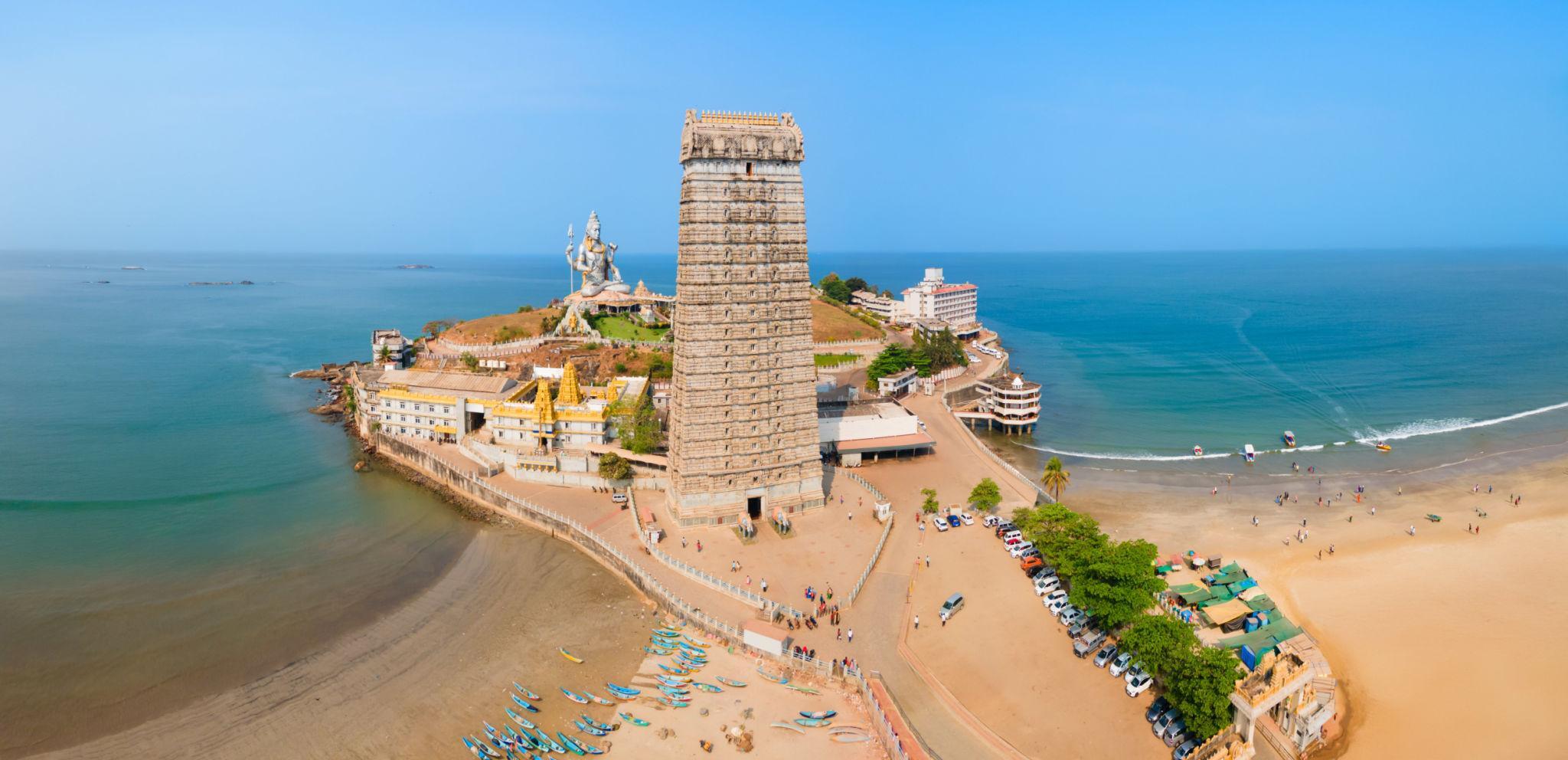
Murudeshwar Temple is one of the most iconic Śiva temples in Karnataka, located on the Arabian Sea coast in Uttara Kannada district. Known for its towering statue of Lord Shiva and its dramatic seaside setting, the temple brings together devotion, mythology, architecture, and natural beauty. For pilgrims and travelers alike, Murudeshwar offers a rare spiritual experience where the sound of ocean waves blends with the atmosphere of prayer and reflection.
The Legend Behind Murudeshwar

According to tradition, Rāvaṇa performed intense penance to please Lord Śiva. Impressed by his devotion, Śiva granted him the powerful Ātmaliṅga, with the condition that it should never be placed on the ground before reaching Lanka.
The gods feared the consequences of Rāvaṇa gaining such power and sought the help of Lord Viṣṇu and Lord Gaṇeśa. During the journey, Gaṇeśa appeared in the form of a young boy and tricked Rāvaṇa into placing the liṅga on the ground at Gokarna, where it became permanently fixed.
In anger, Rāvaṇa attempted to destroy the casing of the liṅga. As he struck it, fragments of the covering scattered across the coastal region. One of these sacred fragments is believed to have fallen at Murudeshwar, making it a revered Śiva kṣetra.
Because of this legend, Murudeshwar is spiritually connected with the Gokarna Mahabaleshwar Temple, forming part of an important coastal Śiva pilgrimage route.
Religious Importance and Scriptural Connections
Murudeshwar’s significance arises mainly from Purāṇic tradition and regional Śaiva worship. While the temple is not directly named in the Vedas, its importance is rooted in the broader sacred geography shaped by the Ātmaliṅga legend.

Part of Sacred Coastal Śiva Geography
In Hindu pilgrimage tradition, temples are often seen as part of a connected spiritual landscape rather than isolated locations. The Murudeshwar–Gokarna region represents a sacred stretch of Śiva worship along the western coast of India.
Devotees often combine visits to:
-
Gokarna Mahabaleshwar
-
Murudeshwar
-
Idagunji Ganapati
-
Kollur Mookambika
This coastal route is considered spiritually powerful and culturally significant in Karnataka.
The Giant Statue of Lord Shiva
Murudeshwar is world-famous for its 123-foot tall statue of Lord Shiva, one of the tallest Shiva statues in the world. Facing the vast Arabian Sea, the statue represents calmness, strength, and timeless stillness.
The serene posture of Shiva overlooking the ocean creates a deeply meditative atmosphere. Many visitors describe the experience as spiritually uplifting and emotionally calming.
Architecture and Temple Complex
Murudeshwar Temple features a majestic 20-storey Raja Gopura, one of the tallest temple towers in India. Visitors can take a lift to the top and enjoy panoramic views of the Arabian Sea and surrounding coastline.
Key highlights of the temple complex include:
-
Scenic seaside location
-
Hilltop temple pathways
-
Prayer halls and shrines
-
Stunning sunrise and sunset views
The temple uniquely blends traditional architecture with breathtaking natural surroundings.
Symbolism of Śiva Beside the Ocean
Murudeshwar’s location beside the sea carries deep symbolic meaning.
In Śaiva philosophy:
-
The ocean represents the vast and infinite reality.
-
Śiva represents the still center of awareness within that vastness.
The temple standing between land and sea symbolizes the journey from the finite world toward the infinite, reminding devotees of balance between effort and surrender, movement and stillness.
Spiritual Significance
Murudeshwar represents:
-
Devotion and surrender
-
The calm power of Lord Shiva
-
The union of nature and spirituality
The temple’s peaceful environment encourages reflection and inner quietness.
Best Time to Visit
The ideal time to visit Murudeshwar is:
-
October to March (pleasant weather)
-
Mahāśivarātri festival (special celebrations)
-
Early mornings and sunsets for peaceful darśana
Conclusion
Murudeshwar Temple offers a rare blend of mythology, devotion, and coastal beauty. Whether visited as a pilgrimage, a travel destination, or a place of quiet reflection, the temple leaves a lasting impression. The sight of Lord Shiva gazing calmly over the ocean reminds visitors of the timeless presence of stillness amidst the movement of life.
