

Rigveda Foundational Orientation


Introduction: Rethinking What We Mean by “Religious Book”
When people hear the word Veda, they often imagine a scripture similar to the Bible or the Quran — a book of fixed beliefs, commandments, and religious rules.
However, this assumption comes from a modern definition of religion that did not exist when the Rigveda was composed.
To understand the Rigveda properly, we must step outside modern categories and enter the world in which it was created.
And in that world, the Rigveda was not a religion — it was a civilizational knowledge text.
1. The Rigveda Predates the Idea of “Religion”
The Rigveda is one of the oldest surviving texts in human history, composed roughly between 1500–1200 BCE (or earlier).
The key point:
The modern idea of religion as an organized belief system emerged much later in history.
Modern religions usually include:
-
A founder
-
A fixed doctrine
-
A central authority
-
A required belief system
-
Rules of membership
The Rigveda contains none of these.
There is:
-
No founder
-
No conversion
-
No dogma
-
No commandments
-
No demand to “believe”
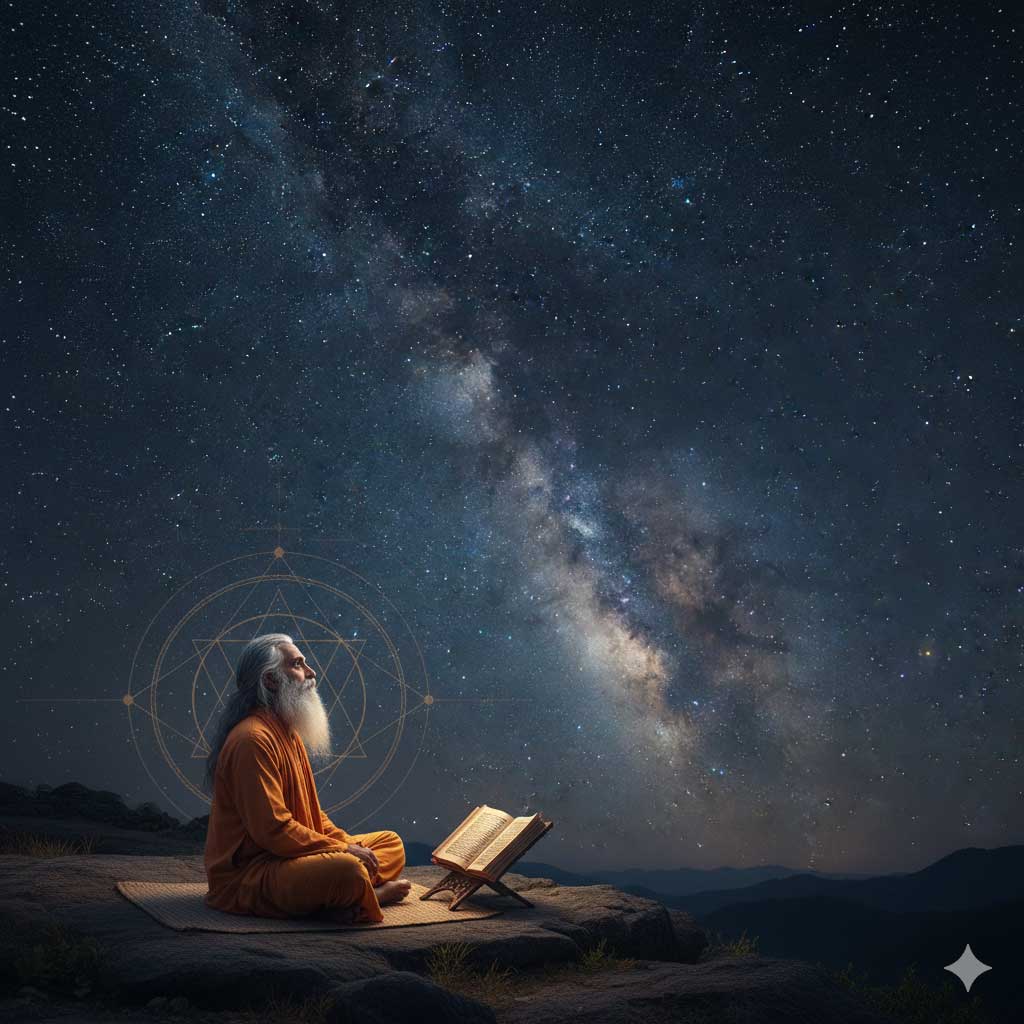
Instead, it contains poetry, questions, wonder, and observation.
2. A Book of Questions, Not Commandments
Most modern religious texts tell followers what to believe and how to behave.
The Rigveda does something radically different — it asks questions.
One of the most famous hymns (Nasadiya Sukta, RV 10.129) asks:
-
How did the universe begin?
-
Did anyone create it?
-
Does even the creator know?
It ends with a striking idea:
Even the highest reality may not know how creation happened.
This is not dogma.
This is philosophy and inquiry.
The Rigveda encourages wonder, not blind belief.
3. The Meaning of “Deva” Was Not “God”
A major misunderstanding comes from translating the word Deva as God.
In the Rigvedic context, Deva means:
-
Shining one
-
Luminous principle
-
Cosmic force
-
Aspect of nature
Agni (Fire), Vayu (Wind), Surya (Sun), Indra (Power), Varuna (Cosmic order) were not gods demanding worship.
They were symbolic ways of understanding nature and existence.
The Rigveda speaks to the universe as alive, intelligent, and interconnected.
This is closer to cosmology and metaphysics than organized religion.
4. No Fear, No Sin, No Eternal Punishment
Modern religion often revolves around:
-
Sin
-
Heaven and hell
-
Divine judgment
-
Obedience
These themes are largely absent in the Rigveda.
Instead, the focus is on:
-
Harmony with nature (Ṛta — cosmic order)
-
Gratitude for existence
-
Wonder at the universe
-
Human participation in cosmic balance
The emotional tone of the Rigveda is not fear — it is awe.
5. A Knowledge Tradition, Not a Faith Tradition
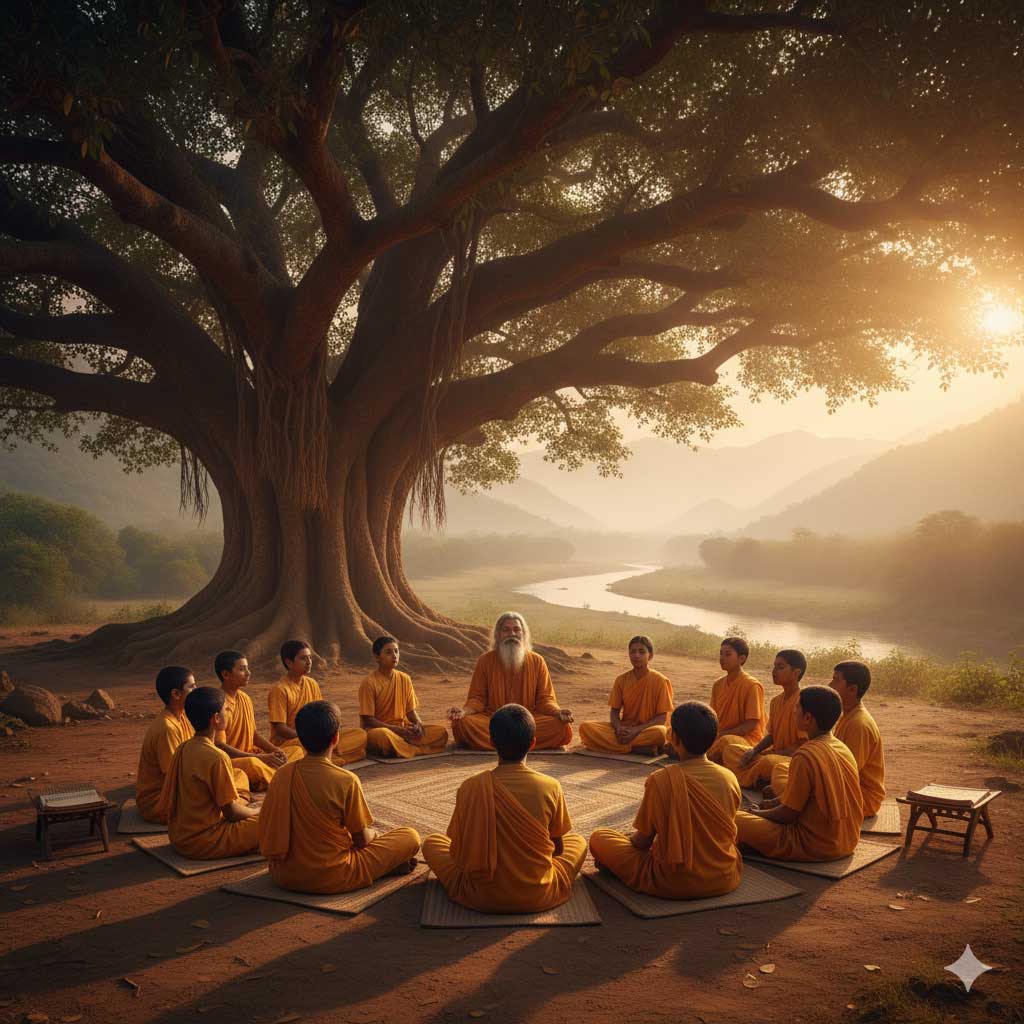
The word Veda literally means knowledge.
The Rigveda belongs to a civilization where knowledge included:
-
Astronomy
-
Ecology
-
Psychology
-
Poetry
-
Philosophy
-
Linguistics
-
Ritual symbolism
The hymns functioned as:
-
Memory tools
-
Knowledge preservation
-
Cultural continuity
-
Philosophical reflection
It was a knowledge ecosystem, not a belief system.
6. The Rigveda Encourages Multiple Truths
Perhaps the most famous Rigvedic statement is:
“Ekam sat viprā bahudhā vadanti”
Truth is One; sages speak of it in many ways.
This single line rejects exclusivity.
Modern religion often says:
“My path is the only path.”
The Rigveda says:
Many paths can express the same truth.
This is philosophical pluralism, not religious exclusivism.
7. The Rigveda Is Closer to Philosophy and Science
If we compare the Rigveda to modern categories, it resembles:
-
Philosophy
-
Poetry
-
Cosmology
-
Anthropology
-
Linguistics
-
Early science
More than it resembles a modern religious book.
It explores:
-
The nature of reality
-
The structure of the universe
-
The power of language and sound
-
Human consciousness
-
The relationship between humans and nature
This is civilizational wisdom literature.
Conclusion: The Rigveda as a Book of Wonder
Calling the Rigveda a “religious book” is like calling ancient Greek philosophy a “church manual.”
It does not fit the category.
The Rigveda is:
-
A book of questions
-
A book of poetry
-
A book of cosmology
-
A book of human wonder
It represents a time when humanity looked at the sky, the rivers, the fire, and the wind — and asked:
What is all this?
And that question is still alive today.
